
Global timber consumption
Global market analysis
Paulownia timber market worldwide: demand, pricing pressure and trade opportunities
This page provides a practical overview of global wood-market dynamics with a focused lens on Paulownia positioning, demand drivers and the difference between real-assets exposure and listed financial market exposure.
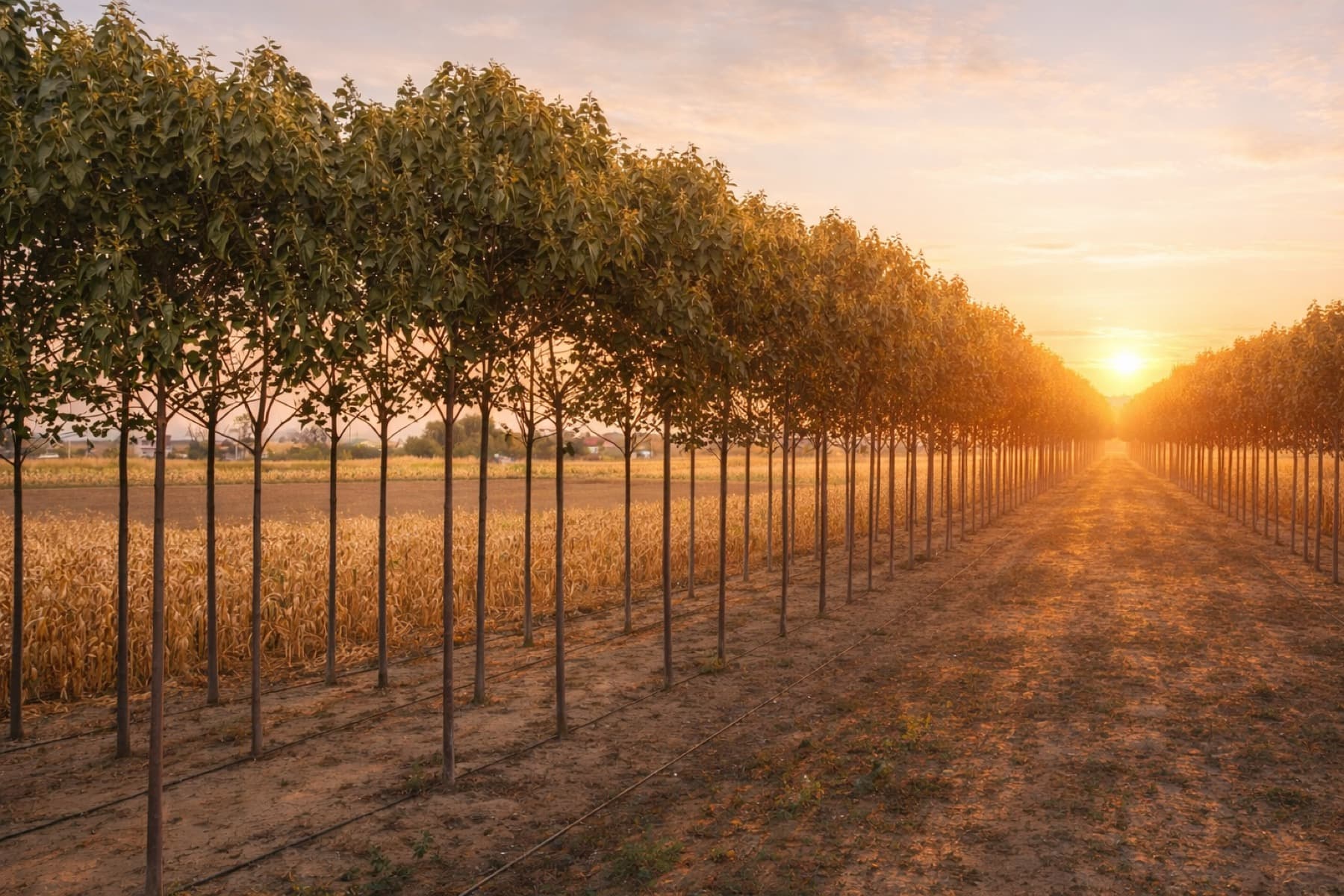
India roundwood demand
57 -> 98 mil. m³
2020 vs 2030 forecastChina roundwood imports
35 -> 60 mil. m³
2010 vs 2019International wood trade
+11%
2018 vs 2017Extended context
Why global wood demand keeps expanding and where Paulownia fits
Timber remains one of the few materials with simultaneous use in construction, industrial applications and sustainability-led portfolios. As global activity expands, supply pressure increases on reliable, traceable and scalable wood sources.
Demand behavior is driven not only by classic lumber usage, but also by urban growth, infrastructure cycles and a manufacturing shift toward lighter materials. In this setup, major import markets shape global pricing pressure.
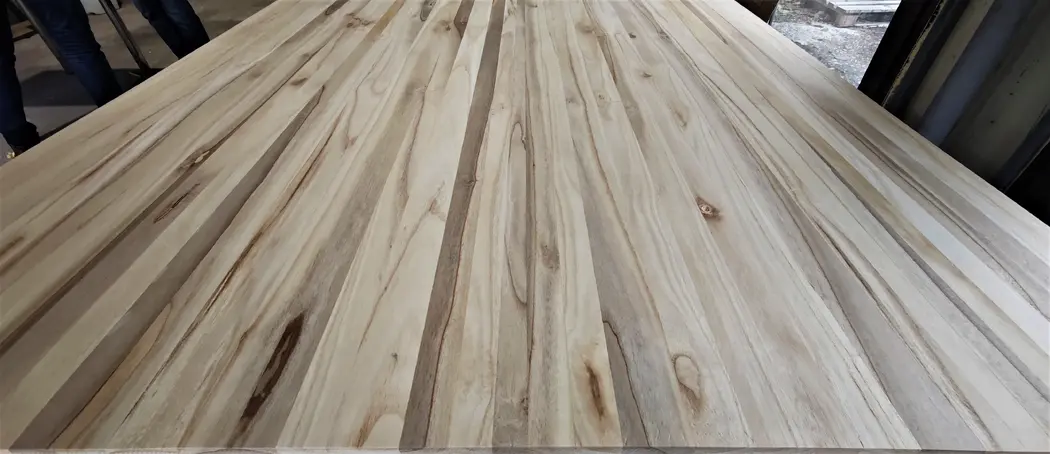
Paulownia sits in a strategic position: low weight, workable structure and relevance for higher-margin segments. Commercial performance improves significantly when raw material is linked with local processing and finished products.
- Global demand favors predictable and traceable wood supply flows.
- Industrial integration increases value per cubic meter.
- Consistent quality and logistics are becoming hard commercial requirements.
- Plantation + processing models improve resilience in volatile cycles.
Market charts
Modern visual summaries built around key market figures
India roundwood demand
Source: Life Forestry
202057 mil. m³
+72%
2030 forecast98 mil. m³
China roundwood imports
Source: Life Forestry
201035 mil. m³
+71%
201960 mil. m³
Demand pressure indicators
India growth (estimate)
2020 -> 2030China growth (historical)
2010 -> 2019Timberland return (quoted mean)
reported range: 10-12%Estimated global demand for roundwood by 2030
~800 mil. m³
7-12 m³/ha/yearexample productivity range for managed tropical plantation systems

Practical interpretation
What these figures indicate for Paulownia positioning
- Large Asian demand supports continued pressure on global timber supply.
- Markets increasingly value faster cycles and traceable production systems.
- Finished-product integration improves margin versus raw material selling.
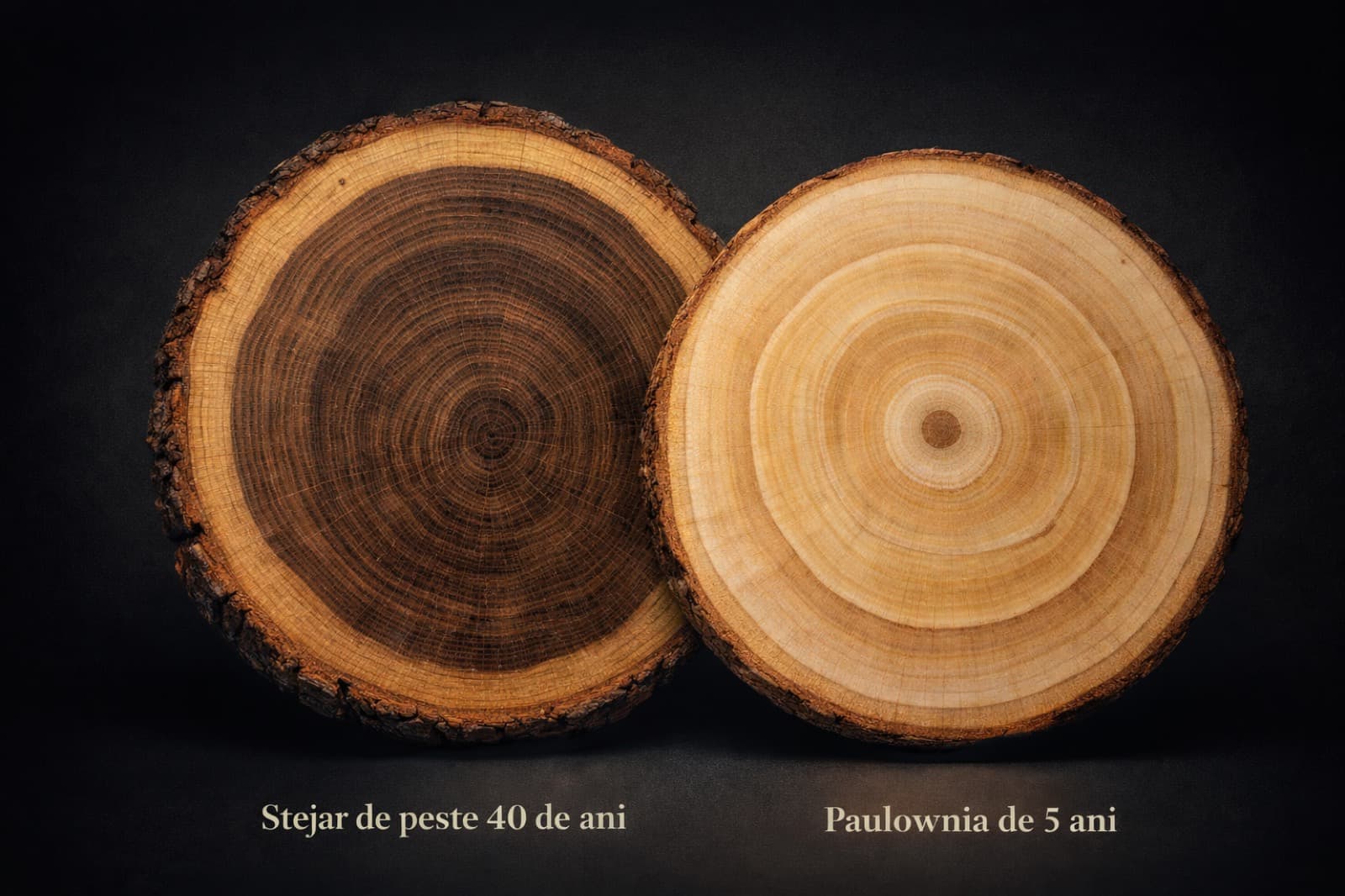
Paulownia vs oak
Paulownia timber as a scalable and sustainable alternative
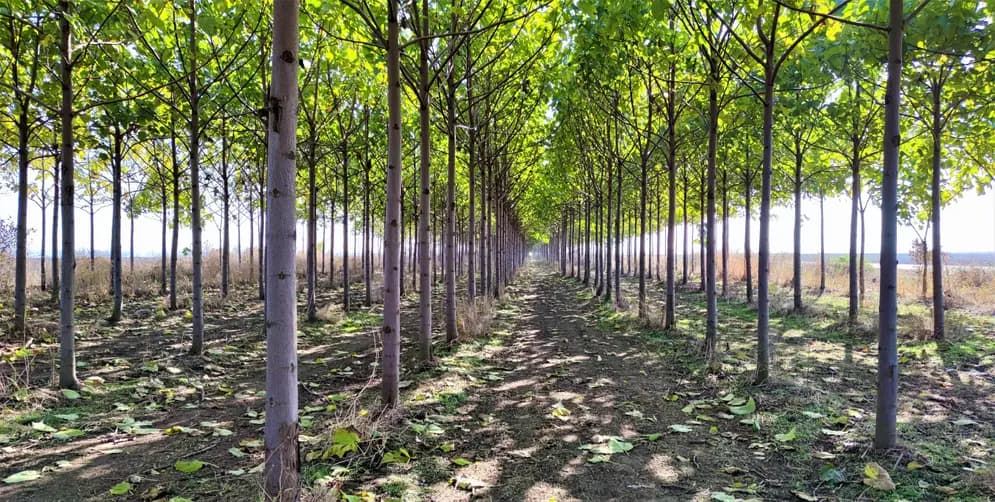
Paulownia commercial cycles are commonly cited in the 7-10 year range, while traditional hardwood cycles often exceed 20 years. This timing difference can matter substantially for capital rotation and planning flexibility.
After harvest, stump regeneration can reduce full replanting pressure and support faster operational continuity. This biological profile improves responsiveness when market demand shifts quickly.
As stricter forestry regulation reduces supply from overexploited hardwood sources, substitution demand tends to increase for scalable alternatives.
In that context, Paulownia can support a long-term strategy built on predictability, shorter production cycles and better integration into value-added products.
iPaulownia synthesized figures
Global market signals relevant for Paulownia timber
Published indicators suggest an expanding market where timber demand is influenced by economic growth, demographic pressure and supply constraints in classic hardwood sources. In this setup, Paulownia is positioned as a commercial alternative where cycle speed and material availability matter.
Source: iPaulownia
International trade in wood products
2017100 index
+11%
2018111 index
Annual acceleration reported in global timber trade
Source: iPaulownia
Global GDP and material demand pressure
200516 trillion USD
+525%
2030 (estimate)100 trillion USD
Structural demand pressure in construction and industrial sectors
Source: iPaulownia
Production cycle: Paulownia vs traditional hardwoods
Paulownia (avg)8,5 years
~61% shorter
Classic hardwoods22 years
Faster biological capital rotation
Capital market vs timber market
How behavior changes during financial crisis periods
During stress phases, listed assets typically show rapid repricing and sentiment-led volatility. Timber markets usually move slower, anchored in biological cycles, commercial contracts and physical production flows.
At portfolio level, this rhythm difference can help diversification between financial and real assets. At the same time, timber assets involve lower immediate liquidity and require stronger operational execution.
The interpretation below is informational and does not represent investment advice. Any capital decision should be validated with a licensed financial advisor.
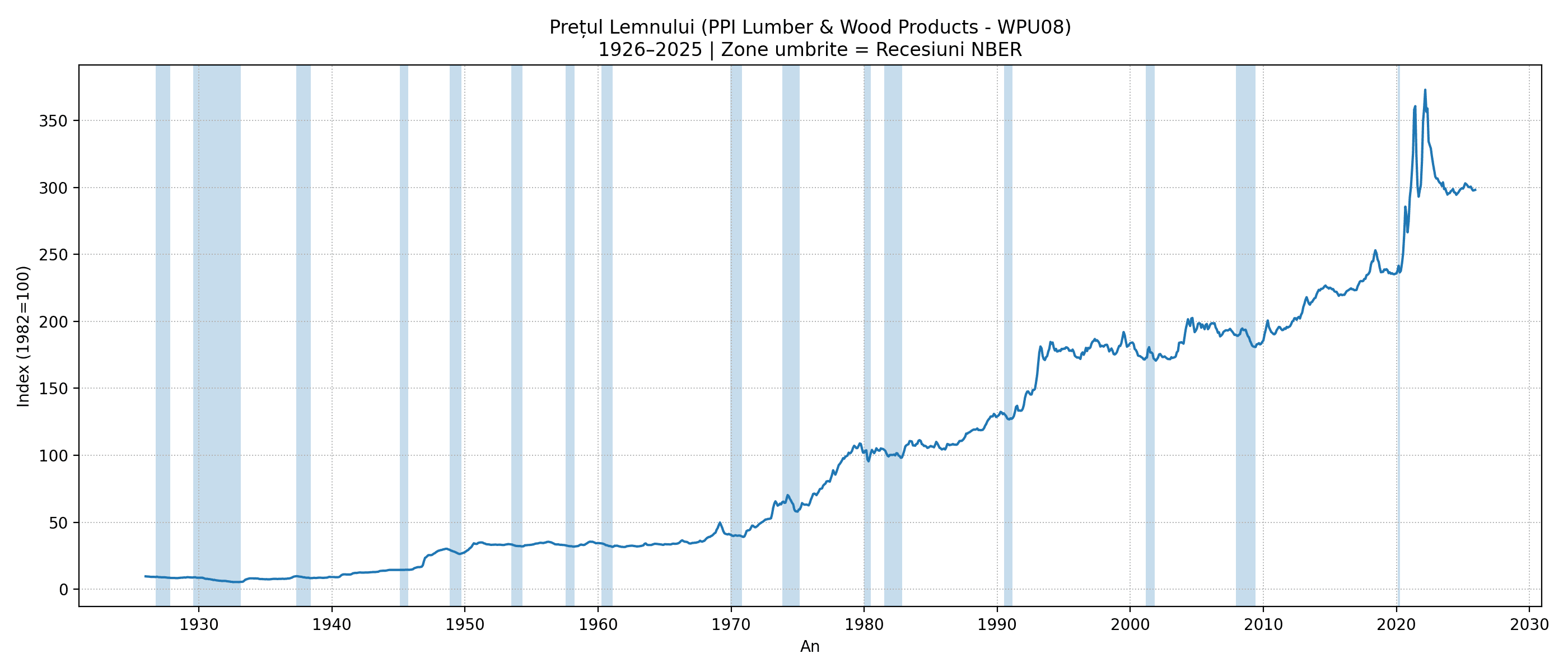 Click to open larger view.
Paulownia timber is a real and sustainable alternative.
Crisis behavior matrix (indicative)
Score 0-100: higher value means stronger characteristic intensity.
Volatility during financial shocks
Listed markets reprice almost instantly during panic, while timber markets tend to adjust more gradually.
Immediate liquidity
Stocks and bonds are traded rapidly, while timber assets require operational cycles before monetization.
Correlation with stock markets
Timber assets are usually less correlated with listed indices in severe crisis phases.
Relative inflation protection
As a real asset, timber can transfer part of inflation through commodity pricing in certain cycles.
Biological accumulation effect
Plantation biology keeps adding wood volume even during periods of high financial market volatility.
Market drivers
Why attention toward Paulownia timber is increasing
Urbanization and construction
Housing and infrastructure growth keeps structural pressure on global timber value chains.
Regional structural deficits
Gaps between domestic supply and local demand continue to support import dependence in major markets.
Sustainability pressure
Tighter forestry regulations improve the case for fast-growing species and managed plantation models.
Strategic positioning
Where stronger margins can be built in Paulownia timber markets
- Shorter commercial growth cycle frequently cited around 7-10 years.
- Strong fit for lightweight segments: panels, furniture, cladding and modular components.
- Higher value potential when plantations connect directly with processing and final products.
- Mature demand in Asia with relevant spillover effects in Europe through substitution demand.
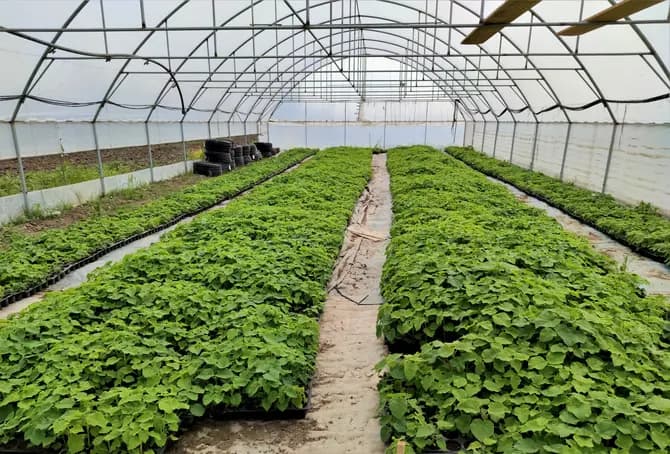
Talk to Verdant
Need a commercial strategy in the global Paulownia timber market?
We can map realistic scenarios for production, market positioning and sales routes: local, export or integrated plantation + manufacturing structures.
Next step
Want to turn market analysis into an investment plan?
Visit our investor page for structured scenarios, implementation steps and timber commercialization options tailored to your project profile.
Social media
Verdant on Instagram and YouTube
Instagram
View profileVerdant Instagram gallery
A curated stream of our latest visuals from Instagram activity.
YouTube
View channel